BLOGGER TEMPLATES AND TWITTER BACKGROUNDS
by D.W. Lundberg

Showing posts with label MEL GIBSON. Show all posts

Saturday, January 16, 2016

... FOR "CINEMA STAPLES AND THE MYSTERY OF THE MAGICALLY BENDING WRIST"

Method acting is a serious craft. It requires you to commit completely to a role, to surrender to it, to take on every quality and mannerism of the character you're playing - in essence, you "become" the character, inside and out. Developed by Konstantin Stanislavski during the years 1911-1916, then later cultivated by "star" practitioners such as Stella Adler and Lee Strasberg, "The Method," as it's called, emphasizes the importance of emotional truth, conveyed internally and externally by the actor. Yet the demands of immersing yourself that deeply into the mind of a character can also have its negative effects, often to the detriment of your own health or sanity. Famous examples of actors taking their "Method" to the extreme include Marlon Brando, who confined himself to a hospital bed for an entire month to prepare for his role as a paraplegic in The Men (1950); Robert De Niro, who gained a whopping 64 pounds to play aging boxer Jake LaMotta in Raging Bull (1980); and Daniel Day-Lewis, who never moved from his wheelchair during the entire six-week shoot for My Left Foot (1989), learned how to track and kill his own food for The Last Of The Mohicans (1992), and caught a slight case of pneumonia while shooting Gangs Of New York (2002) because he refused to wear clothes that were untrue to the period.

The authenticity of these performances aside, there are limits, of course, to how much an actor is willing to sacrifice for his art. To play a character who returns from the dead, for example, it's probably unnecessary for anyone to die and be resuscitated in order to achieve the "emotional truth" of the moment (that's what the Internet was invented for, people!). The same goes for trying to relive a past sexual or childhood trauma, or resorting to actual drug use for a part, which any medical processional will tell you, is likely to cause more psychological and physical damage than it's probably worth. (I am reminded of a scene from 1976's Marathon Man, in which Dustin Hoffman kept himself awake for three days straight to accurately portray his character's disorientation and terror. When co-star Laurence Olivier heard this, he told Hoffman, "Why don't you just try acting?")

Wednesday, December 24, 2014

... FOR "THE GREATEST ANTI-CHRISTMAS CHRISTMAS MOVIES OF ALL TIME"

Well, it's Christmas time again, folks! Which means exactly one thing here around the office: endless conversations about what does and does not constitute a Christmas movie. This debate began roughly three years ago, when someone (I think it was myself) singled out Die Hard as the Greatest Christmas Movie Of All Time. This choice, of course, was met with heaping doses of disapproval and disdain (including the immortal argument: "Die Hard doesn't count! Santa Claus isn't even in it!") and has only gotten worse over time.

To which I reply: Why shouldn't it count? What is it about Die Hard that screams NOT A CHRISTMAS MOVIE! anyway? I mean, Home Alone counts as a Christmas movie. Why discount Die Hard when Home Alone tells the same basic story - albeit with less gunplay and foot-slicing – yet still counts itself as a holiday staple in households across America? What makes Die Hard any different from your It's A Wonderful Lifes or your Miracle On 34th Streets, despite the fact that it centers around Mr. Bruce Willis killing the crap out of terrorists for two hours, rather than reindeer and festive good cheer?

Saturday, July 5, 2014

... IN DEFENSE OF "THE FILMS OF M. NIGHT SHYAMALAN"

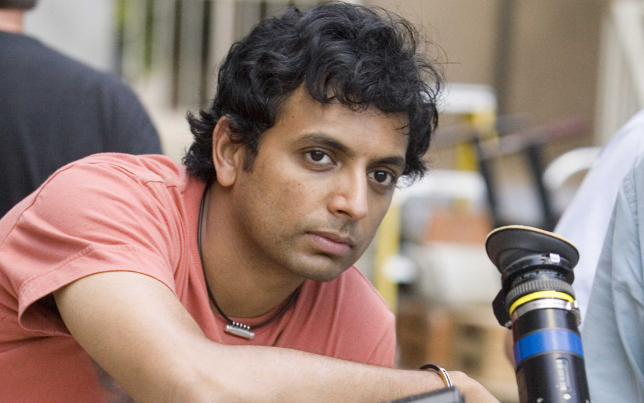
Writing the post on plagiarism was fun, not just because it distracted me from the business of Disney or comic books or strange coincidences between films, but because it reminded me of something I hadn't thought about in quite some time: the films of M. Night Shyamalan. No doubt you recognize the name; there was a time not long ago, in fact, when audiences could barely bring themselves to think about anyone else. From The Sixth Sense (1999) to Unbreakable (2000) to Signs (2002) and, yes, even The Village (2004), the man could do no wrong, at least in the eyes of box office pundits. Then came the accusations of ripping off other people's work, the big-screen debacle that was Lady In The Water (2006), and worse, The Happening (2008), and suddenly, the one-time wunderkind was reduced to a fake and a fraud, a Hollywood hack whose luck - not to mention his talent - had definitely run out. (And don't get me started on After Earth or The Last Airbender, big-budget studio extravaganzas which clearly showed Shyamalan out of his element.)

Still, for a while there, Shyamalan was rightly regarded as one of the defining voices of the 90s/early Noughties. Like Tarantino, Fincher, Anderson (Wes or P.T.) or Jonze, you went to see a Shyamalan movie to experience the shock of the new, for the mood he created, and for the many ways he toyed with the language of film. Everyone remembers the twist to The Sixth Sense (and to a lesser extent, Unbreakable and The Village), yet there is so much more to his earlier films than initially meets the eye. His long, languishing camera takes, for one - as opposed to the staccato style of editing so common to the contemporaries of his day (here's looking at you, Michael Bay). Or the way he used specific colors to key us in on important plot points. By the time he was 32, people were calling him "the next Spielberg," or, better still, "the next Hitchcock." With praise like that, it's no wonder all the acclaim and attention seemed to go to his head.

Monday, December 2, 2013

... FOR "CINEMA STAPLES AND THE PECULIAR POSITIONING OF NAMES ON MOVIE POSTERS"


While we're stuck on a movie poster kick, I happened to catch a 10-minute featurette on Ridley Scott's The Counselor the other day, which, among clips and talking-head interviews and the like, also featured red-carpet footage from the movie's October 3rd UK premiere. As they questioned star Michael Fassbender for the camera, I couldn't help but notice a peculiar poster for the film in the background (note: this photo is obviously from an Entertainment Tonight report from the very same event, and not, obviously, from the featurette I watched on the TV the other night, since I couldn't find a photo from that):


It's nothing special as far as posters go, just your typical mishmash of the actors' profiles to let you know who's actually in the movie, except for one particular problem: their names don't line up with their faces! And it took my brain a moment to process it (Why, that isn't Fassbender - that's Cameron Diaz! And that isn't Cameron Diaz - it's Brad Pitt!). Here's a closer look, so you can see what I'm talking about:

Friday, January 6, 2012

... FOR "WALT DISNEY'S ANIMATED FIFTY (PART 33 - 'POCAHONTAS' EDITION)"

My continuing foray into Disney's fifty official Animated Classics. As always, don't hesitate to share your thoughts/memories/complaints in the comments section below. Links to previous entries have also been included below.

Title: Pocahontas (1995)

The Plot: The daughter of a Native American chieftain encounters English colonists in 16th- century Virginia, and falls in love with a soldier.

The Songs: "The Virginia Company," "Steady As The Beating Drum," "Just Around The Riverbend," "Listen With Your Heart," "Mine, Mine, Mine," "Colors Of The Wind," "Savages," "If I Never Knew You (Love Theme From Pocahontas)," "Colors Of The Wind (End Title)"

Saturday, October 22, 2011

... FOR "FRANCHISE FACE-OFFS (PART 8 - 'LETHAL WEAPON' EDITION)"

In almost every movie romance, there's a thing called the "meet cute," in which a boy and a girl are brought together in some deliberate comic fashion - often the result of an awkward social mishap or hilarious misunderstanding. This is, of course, just their first step toward falling in love: both characters usually come from opposite sides of the tracks, and will spend the rest of the plot bickering and flirting and generally getting on each other's nerves – until finally, at the end, they realize they are Made For Each Other.

Some noteworthy examples of this. In Frank Capra's It Happened One Night (1934), runaway heiress Claudette Colbert meets down-on-his-luck reporter Clark Gable while arguing over a seat on a bus. In Disney's One Hundred And One Dalmatians (1969), Pongo the dog "arranges" a meeting between humans Roger and Anita at the park (they argue for about two seconds before falling into a pond together). In Grease (1978), John Travolta and Olivia Newton-John's "meet cute" doesn't actually occur on screen, but is recounted during a musical number instead ("She swam by me, she got a cramp
" / "He went by me, got my suit damp"). And in 1993's Sleepless In Seattle, Tom Hanks and Meg Ryan don't officially "meet cute" until movie's end – on top of the Empire State Building, no less, on Valentine's Day.

When it comes to the Buddy Film – which, you will recall, follows the same basic plot structure as the Romantic Comedy, minus the romance – the concept of "meet cute" still applies. Oh, the end result may turn out different, but the function of it is the same: to unite two characters with conflicting personalities in some fateful, memorable way, thus setting them at odds with each other for the rest of the movie. (This is otherwise known as "conflict.")


Wednesday, December 15, 2010

... FOR "FALLEN STARS AND THE CAREERS THEY LEAVE BEHIND"

Knight And Day stars Cameron Diaz as a single, solitary Boston gal who falls for a charming stranger on a return flight from Wichita, Kansas. They meet when she bumps into him at the airport – twice, literally. On the plane, they strike up some sparkling conversation. Later, she emerges from the lavatory to find he's killed every passenger on board, including the pilots (actually, he explains, he shot the first pilot who in his death throes turned and shot the other one). He crashes the plane in a cornfield, and the two of them emerge unharmed from the wreckage. Still, she's curiously unfazed – if anything, the fact that this man may in fact be a serial killer only makes him more mysterious... and more attractive. (He did not, after all, try to kill her.) Also, it helps that he's played by Tom Cruise.

You remember Tom Cruise. He used to be kind of a big deal. It was that big, toothy grin of his, the cocky assuredness that made him a star. Audiences ate it up – men, women, it didn't matter. Top Gun. Days Of Thunder. A Few Good Men. The Firm. Mission: Impossible. Jerry Maguire. All $100-million-plus grossers in U.S. box office revenue alone. By 2009, his films totaled over $6.5 billion worldwide. Clearly, the guy could do no wrong. In 1997, Empire magazine even voted him one of the five top movie stars of all time.