skip to main |
skip to sidebar
Well, it's Christmas time again, folks! Which means exactly one thing
here around the office: endless conversations about what does and does not
constitute a Christmas movie. This debate began roughly three years ago, when
someone (I think it was myself) singled out Die
Hard as the Greatest Christmas Movie Of All Time. This choice, of course,
was met with heaping doses of disapproval and disdain (including the immortal
argument: "Die Hard doesn't
count! Santa Claus isn't even in it!") and has only gotten worse over
time.
To which I reply: Why shouldn't it count? What is it about Die Hard that screams NOT A CHRISTMAS MOVIE! anyway? I mean, Home Alone counts as a Christmas movie. Why
discount Die Hard when Home Alone tells the same basic story -
albeit with less gunplay and foot-slicing – yet still counts itself as a
holiday staple in households across America? What makes Die Hard any different from your It's A Wonderful Lifes or your Miracle
On 34th Streets, despite the fact that it centers around Mr. Bruce
Willis killing the crap out of terrorists for two hours, rather than reindeer
and festive good cheer?
A continuation on a theme, again, as we take a closer look at Die Hard (1988). Unquestionably one of the most influential action films of the 80s (along with Raiders Of The Lost Ark and John Woo's The Killer), John McTiernan's game-changing box office blockbuster snuck up on audiences worldwide, catapulting Bruce Willis into superstardom and launching its own brand of wannabes and knockoffs ("Die Hard... on a boat!" "Die Hard... on a plane!" "Die Hard... in a hockey arena!" ). To judge the film by its countless clones and imitators, though, is to diminish its special contributions to the genre.
Aside from the obvious, which we'll cover in a future Franchise Face-Off (or, if you prefer, you can read Matt Zoller Seitz's in-depth appreciation of its 25th anniversary here), Die Hard is a masterpiece of spatial composition and the characters' relation to the camera frame. The production design by Jackson DeGovia, for example, or McTiernan's staging of certain shots, which constantly arranges actors and objects in trianglular formations:
Last week's post
took a lot out of me. I've said it before, but it takes a tremendous amount
of brain power to focus all my extra energy and attention on one particular
type of film or filmmaker these days, especially with the stresses of work (two
jobs!) and family (four kids!) taking precedence so much of the time, and
picking apart the films of M. Night Shyamalan was no exception. What it did,
however, was get me thinking of other directors' most recognizable trademarks -
those nuances or specific camera techniques repeated again and again throughout
their cinematic oeuvres. Whether big (Spielberg's Looking Wide-Eyed With Wonder At Some Off-Screen Presence shots) or small (Hitchcock's cameos), directors do love
sticking their personal stamp on things. If they didn't, how else would we know
who directed what?
Once a staple of
late-'80s/early-'90s action cinema, John McTiernan has long since disappeared
from the spotlight, mostly due to his nasty run-in with the federal government
(well, that and Rollerball [2002]).
For a while, though, he was widely considered king, with Predator (1987), Die Hard
(1988) and The Hunt For Red October (1990) entrenching themselves forever into the public consciousness. To this
day, critics and film scholars continue to sing McTiernan's praises, in
particular David Bordwell, who speaks on his blog about the
director's penchant for "unfussy following shots" and
"tightly-woven classicism." And while it's true that McTiernan's
style may seem positively old-fashioned compared to today's smash-and-grab
editing techniques, like many filmmakers, he wasn't above cribbing from himself
on a regular basis.
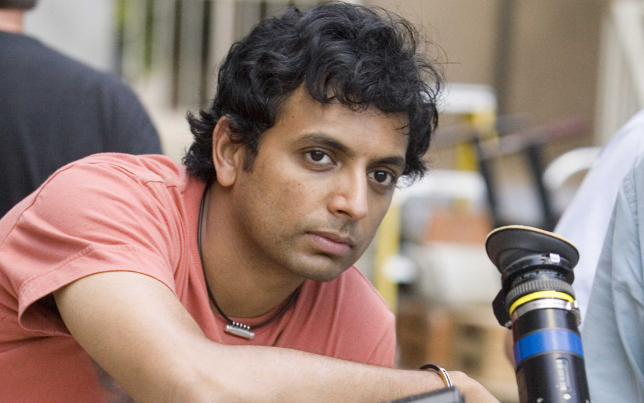
Writing the post on plagiarism was fun, not just because it
distracted me from the business of Disney or comic books or strange coincidences between films, but because it reminded me of something I hadn't
thought about in quite some time: the films of M. Night Shyamalan. No doubt you
recognize the name; there was a time not long ago, in fact, when audiences
could barely bring themselves to think about anyone else. From The Sixth Sense (1999) to Unbreakable (2000) to Signs (2002) and, yes, even The Village (2004), the man could do no
wrong, at least in the eyes of box office pundits. Then came the accusations of
ripping off other people's work, the big-screen debacle that was Lady In The Water (2006), and worse, The Happening (2008), and suddenly, the
one-time wunderkind was reduced to a fake and a fraud, a Hollywood hack whose
luck - not to mention his talent - had definitely run out. (And don't get me
started on After Earth or The Last Airbender, big-budget studio
extravaganzas which clearly showed Shyamalan out of his element.)
Still, for a while there, Shyamalan was rightly regarded as one
of the defining voices of the 90s/early Noughties. Like Tarantino, Fincher,
Anderson (Wes or P.T.) or Jonze, you went to see a Shyamalan movie to
experience the shock of the new, for the mood he created, and for the many ways
he toyed with the language of film. Everyone remembers the twist to The Sixth Sense (and to a lesser extent,
Unbreakable and The Village), yet there is so much more to his earlier films than
initially meets the eye. His long, languishing camera takes, for one - as
opposed to the staccato style of editing so common to the contemporaries of his
day (here's looking at you, Michael Bay). Or the way he used specific colors to
key us in on important plot points. By the time he was 32, people were calling
him "the next Spielberg," or, better still, "the next
Hitchcock." With praise like that, it's no wonder all the acclaim and
attention seemed to go to his head.


