BLOGGER TEMPLATES AND TWITTER BACKGROUNDS �
by D.W. Lundberg

Showing posts with label BUDDY COPS. Show all posts

Wednesday, December 24, 2014

... FOR "THE GREATEST ANTI-CHRISTMAS CHRISTMAS MOVIES OF ALL TIME"

Well, it's Christmas time again, folks! Which means exactly one thing here around the office: endless conversations about what does and does not constitute a Christmas movie. This debate began roughly three years ago, when someone (I think it was myself) singled out Die Hard as the Greatest Christmas Movie Of All Time. This choice, of course, was met with heaping doses of disapproval and disdain (including the immortal argument: "Die Hard doesn't count! Santa Claus isn't even in it!") and has only gotten worse over time.

To which I reply: Why shouldn't it count? What is it about Die Hard that screams NOT A CHRISTMAS MOVIE! anyway? I mean, Home Alone counts as a Christmas movie. Why discount Die Hard when Home Alone tells the same basic story - albeit with less gunplay and foot-slicing – yet still counts itself as a holiday staple in households across America? What makes Die Hard any different from your It's A Wonderful Lifes or your Miracle On 34th Streets, despite the fact that it centers around Mr. Bruce Willis killing the crap out of terrorists for two hours, rather than reindeer and festive good cheer?

Saturday, March 3, 2012

... FOR "FRANCHISE FACE-OFFS (PART 12 - 'SHERLOCK HOLMES' EDITION)"


Will the real Sherlock Holmes please stand up? The great thing about the original stories by Sir Arthur Conan Doyle is just how much that question is left open to interpretation. Recounted in the first-person by the estimable Dr. John H. Watson, M.D., Holmes's flatmate and partner in (solving) crime, it is next to impossible to tell what the world's "first consulting detective" might be thinking at any given moment; indeed, Watson can only stand back and observe, in awe and wonderment, as that great and fevered brain goes on about its business. If we're lucky, Holmes might even key us in on his investigative process - how, for example, he is able to deduce (correctly) a killer's age simply by the gait in his footprints. More often than not, though, we're left to ponder the evidence all on our own - not just about the mystery at hand, but also about this strange, enigmatic cipher at its center.

This is no doubt why readers have been so enthralled by Holmes's adventures over the years. Doyle published the first, A Study In Scarlet, in 1887's Beeton's Christmas Annual, and even now - four novels and 56 short stories later - we have only pieces of the character's true psychological makeup. What we do know is mostly limited to the external: Watson, upon their first meeting, describes Holmes as well over six feet tall, thin, with a "hawk-like nose" and "sharp[,] piercing" eyes. He is emotionless, distant, prone to fits of manic depression when his mind isn't busied on a case, and is a master of deductive reasoning. He will never miss a chance to remind you of this last important fact.

That's all well and good, but what about the man inside - his hopes, his dreams, his thoughts, his fears? Is there more to him than meets the eye? Or do his actions speak for themselves? Why is he so driven, so intensely focused, so difficult to identify with on a personal level? (Modern theorists attribute this behavior to Asperger's Syndrome.) He's been the subject of countless films, radio adaptations, literary spin-offs, TV series, even a Disney cartoon - each with their own personal take on the character, but sharing one common trait: Sherlock's obsessive love of the chase. And he's just as popular as ever. My, how we love a good mystery man.


Tuesday, December 20, 2011

... FOR "FRANCHISE FACE-OFFS (PART 11 - 'RUSH HOUR' EDITION)"


Brett Ratner is a chameleon. This might explain why the self-promoting, self-aggrandizing director - whose films have amassed a collective $1 billion plus worldwide - has been able to slip into so many franchises without ruffling the feathers of fans. He did it in 2002, with Red Dragon, part three of Dino De Laurentiis' Hannibal Lecter series starring Anthony Hopkins. Then in 2006, he took over the ­X-Men franchise with The Last Stand, the most successful entry in Fox's genre-defining ensemble superhero saga.

(On the non-franchise front, you could view his 2000 holiday hit The Family Man as an unofficial remake of Capra's It's A Wonderful Life, or November's Tower Heist as an attempt to copy the con-artists-as-heroes cool of Soderbergh's Ocean's Eleven. The list goes on.)

Whether this qualifies him as an A-list copycat or a B-grade Hollywood hack is up for debate. The fact is, Ratner copies the style of his predecessors so well, you'd be hard-pressed to tell that they were made by a different director, unless you were acutely aware of the behind-the-scenes dramas that plagued their productions.


Wednesday, November 30, 2011

... FOR "FRANCHISE FACE-OFFS (PART 10 - 'MEN IN BLACK' EDITION)"

Question: How many people actually realize that 1997's Men In Black is based on a comic book? No doubt you saw the commercials and you bought your ticket and laughed at all the jokes and the witty special effects, and you probably own the VHS or the DVD or the Blu-Ray, but did you ever stop to think that you were, in fact, watching a Comic Book Movie?

Maybe, maybe not. Originally published by Marvel/ Aircel Comics as a three-issue mini-series in 1990, Lowell Cunningham's The Men In Black was optioned by producers Walter F. Parkes and Laurie MacDonald in 1992. The project went through various incarnations (and a director or two) before finally settling at Columbia Pictures, under the tutelage of Barry Sonnenfeld (The Addams Family, Get Shorty) and executive producer Steven Spielberg. When it opened on July 2nd, 1997, MIB was met with all the fanfare and fervor of your typical summer blockbuster. It grossed $587 million in theaters worldwide (Columbia's highest-grossing movie up to that point), and cemented Will Smith's reputation as a bona fide box office star. 

 
Yet rarely, if ever, will you find MIB counted among the most successful Comic Book Movies ever made. Why is this? Perhaps because of the way it was marketed – as the Next Will Smith-Versus-Aliens Summer Blockbuster (after Independence Day). Or perhaps in the wake of Batman & Robin (released to critical and commercial disdain just two weeks earlier), the filmmakers thought it best to distance themselves from their genre roots as far as possible.


Saturday, October 22, 2011

... FOR "FRANCHISE FACE-OFFS (PART 8 - 'LETHAL WEAPON' EDITION)"

In almost every movie romance, there's a thing called the "meet cute," in which a boy and a girl are brought together in some deliberate comic fashion - often the result of an awkward social mishap or hilarious misunderstanding. This is, of course, just their first step toward falling in love: both characters usually come from opposite sides of the tracks, and will spend the rest of the plot bickering and flirting and generally getting on each other's nerves – until finally, at the end, they realize they are Made For Each Other.

Some noteworthy examples of this. In Frank Capra's It Happened One Night (1934), runaway heiress Claudette Colbert meets down-on-his-luck reporter Clark Gable while arguing over a seat on a bus. In Disney's One Hundred And One Dalmatians (1969), Pongo the dog "arranges" a meeting between humans Roger and Anita at the park (they argue for about two seconds before falling into a pond together). In Grease (1978), John Travolta and Olivia Newton-John's "meet cute" doesn't actually occur on screen, but is recounted during a musical number instead ("She swam by me, she got a cramp
" / "He went by me, got my suit damp"). And in 1993's Sleepless In Seattle, Tom Hanks and Meg Ryan don't officially "meet cute" until movie's end – on top of the Empire State Building, no less, on Valentine's Day.

When it comes to the Buddy Film – which, you will recall, follows the same basic plot structure as the Romantic Comedy, minus the romance – the concept of "meet cute" still applies. Oh, the end result may turn out different, but the function of it is the same: to unite two characters with conflicting personalities in some fateful, memorable way, thus setting them at odds with each other for the rest of the movie. (This is otherwise known as "conflict.")


Friday, September 9, 2011

... FOR "FRANCHISE FACE-OFFS (PART 7 - '48HRS.' EDITION)"

When casting any movie, chemistry is key. Nothing sinks a star vehicle more quickly and efficiently than actors who clearly do not get along – see Marilyn Monroe and Sir Laurence Olivier in 1957's The Prince And The Showgirl for the most notorious example of this, or, more recently, Ben Affleck with basically anyone. Good chemistry, on the other hand, can be like catching lightning in a bottle – can turn even the most routine and cliché-ridden screenplay into something electric, transcendent, sparkling and true.

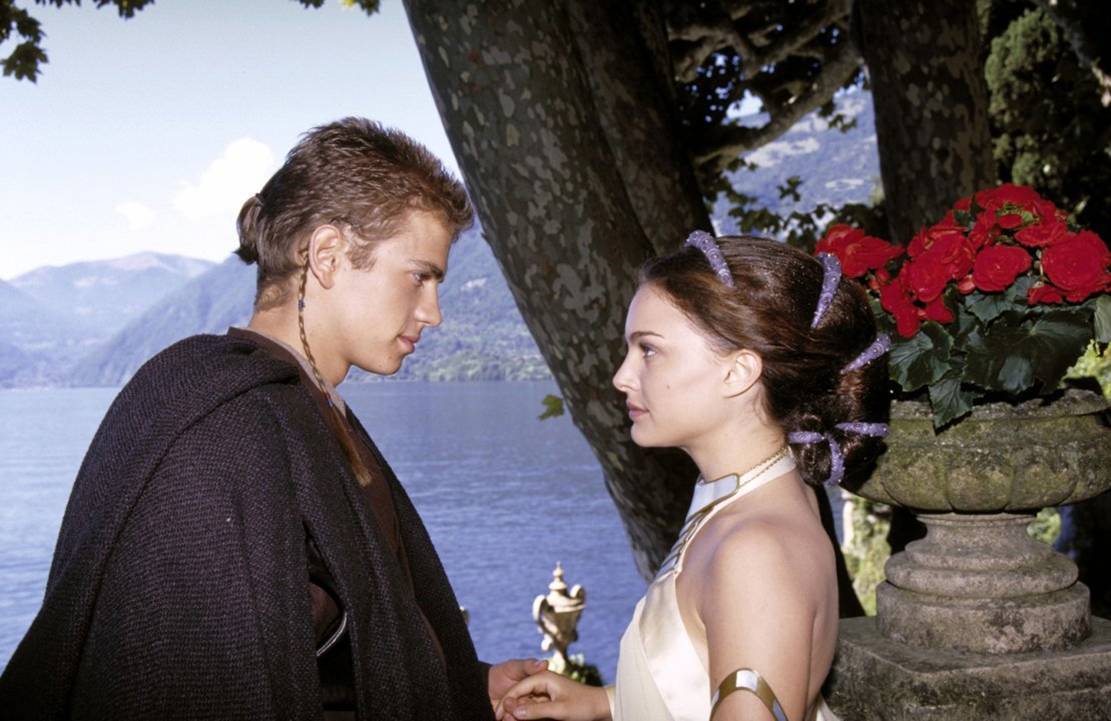
This is especially important for two genres in particular. First and foremost is the Romantic Comedy, in which an audience is expected to buy into the notion that two characters are destined for each other in all matters of life and love, and that external forces either cannot or will not stand in between them. For this idea to actually stick, the viewer must believe that both actors are fully and truly attracted to each other; otherwise, what is there to root for? Successful examples of this throughout history include Spencer Tracy and Katherine Hepburn (acerbic banter at its best), Fred Astaire and Ginger Rogers (whose passion for each other often caused them to break out into elaborate dance numbers), and Hayden Christensen and Natalie Portman (I'm kidding).